Category


Sign Up for Our Newsletter
Lake Como in Spring: The Definitive Guide to a Region the Internet Has Not Yet Ruined
The photographers have not yet found a way to overstate Lake Como, which is either a testament to the limits of photographic exaggeration or evidence that the lake itself is genuinely beyond the camera’s reach. Standing on the stone terrace of a 19th-century villa above Bellagio, watching the Grigne range turn amber in the late afternoon, with the water below changing color in layers from the shore to the center – you understand, immediately, that this is one of the places on earth that exist in a separate category from other beautiful places, and why it defines any serious Lake Como spring travel guide.
The internet has, of course, noticed. April and the beginning of May represent the last genuinely quiet weeks on the lake before the summer season activates and the ferry queues at Bellagio become a thing you must manage. This is not a secret to anyone who lives or works on the lake. Act accordingly, especially when planning with essential Lake Como travel tips.
The Geography, Which Matters
Como is Y-shaped: the western arm runs north from the town of Como to Gravedona, the eastern arm north to Lecco, and the center section – the Tremezzina, Bellagio, and Varenna – sits at the fork of the Y, where the lake is widest, deepest, and most visually dramatic. Almost everything worth knowing about is clustered in this central section. The towns of Como and Lecco at the southern ends of the arms are pleasant and have good transport connections; they are not why you came.
Bellagio – the “Pearl of the Lake,” positioned precisely at the fork – is the most famous town and deserves its reputation while managing it with varying success. The main piazza and staircase streets can be congested by noon in summer; in May, they are navigable and genuinely beautiful. Stay outside Bellagio itself but use it as a day-trip and dining anchor.
Where to Stay
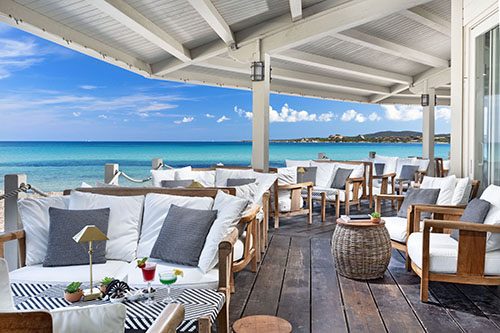
[Image: Luxury hotel terrace overlooking Lake Como | Alt: Lake Como luxury hotels view]
Grand Hotel Tremezzo is the grande dame of the western shore and the property that best embodies what Lake Como luxury has historically meant: a Belle Époque palazzo hotel in pale yellow stucco, floating pools extending over the lake surface, a spa in a renovated Art Deco villa set into the hillside, and a restaurant (La Terraza) where the combination of the lake view and the risotto produces the kind of meal you describe in specific terms years later. The service standard is as good as any five-star in Italy, and Italy’s five-stars are the global benchmark for warmth combined with competence, making it one of the finest Lake Como luxury hotels.
Villa d’Este in Cernobbio is the other legendary property: a 16th-century cardinal’s villa converted into a hotel in 1873 and operated ever since with a continuity of vision – traditional, formal, Italian to its foundations – that has made it the preferred lakeside address for royalty, diplomats, and discerning repeat visitors for 150 years. Its floating swimming pool, anchored in the lake, is an experience that requires no elaboration.
Sereno on the eastern shore offers the contemporary counterpoint: a design hotel conceived by Patricia Urquiola, with a pool, spa, and restaurant of rare quality (Sereno Bar has the best Negroni on the lake), and an architectural sensibility that produces rooms oriented fully toward the water. For travelers who find the grande dame properties beautiful but not quite their register, Il Sereno is the answer.
What to Do: The Three Days That Matter
Day One: On the water. Hire a wooden Riva boat and a local skipper – the concierge at any of the above properties will arrange it – and spend the morning moving between the lakeside villas that are accessible by water but not by road: the Villa Balbianello (the Bond film location that looks as though it was designed for exactly that purpose), the Villa Carlotta gardens, and the Abbazia di Piona, a Benedictine monastery on the northeastern shore that receives almost no visitors and rewards them accordingly.
Day Two: Varenna. The eastern shore town has less tourist infrastructure than Bellagio and more genuine character. Walk the Passeggiata degli Innamorati (the Lovers’ Walk) along the shoreline before 9am. Coffee at a café on the piazza. The ferry to Bellagio for lunch at Ristorante Bilacus – the risotto with perch from the lake, which is the correct lunch. Back to the hotel by mid-afternoon.
Day Three: Into the hills. The road from Tremezzina up into the Val Menaggio provides the perspective you cannot get from water level: the lake entire, contained and extraordinary, the Alps behind it, the villages arranged along the shore like a sentence you can now read having learned the language. Drive it, stop when something demands stopping, and arrive in Lugano – just across the Swiss border – for a late lunch and the experience of the same landscape administered by a different national character.
[Image: Boat on Lake Como at sunset | Alt: Lake Como travel tips scenic view]
Como in May, before the summer. This is the edit, and the moment that defines any well-planned Lake Como spring travel guide.
Back to Blog